
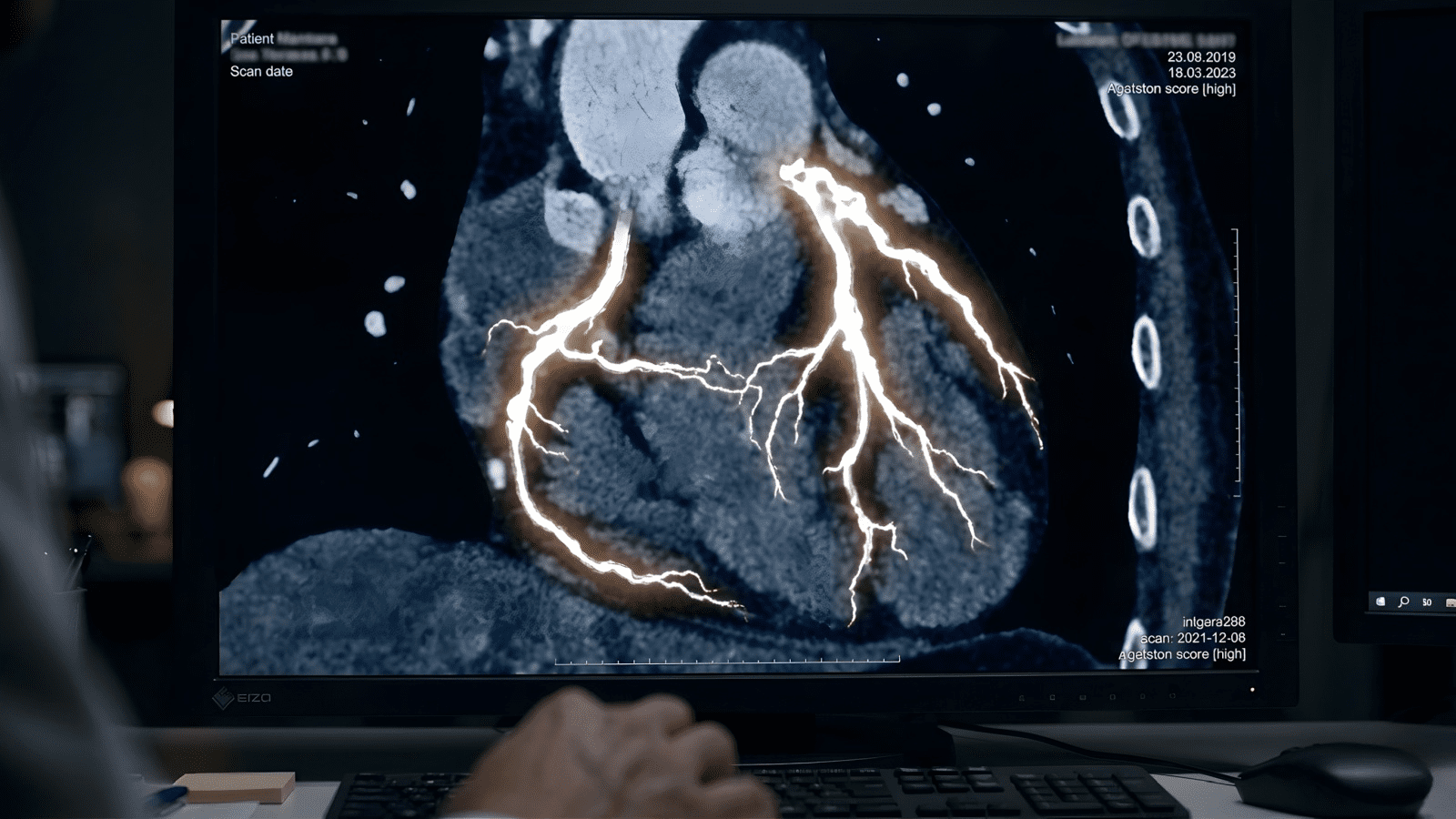
Cardiac CT Calcium Scoring: The 5-Minute Scan That Predicts Heart Attack Risk

Cardiac CT Calcium Scoring: The 5-Minute Scan That Predicts Heart Attack Risk
Most heart attacks happen without warning. You feel fine, your cholesterol looks manageable, and then—suddenly—a cardiac event changes everything.
What if you could see the warning signs years before symptoms appear? That’s exactly what cardiac CT calcium scoring provides: a 5-minute, non-invasive scan that measures the amount of calcified plaque in your coronary arteries—giving you a quantifiable measure of heart disease risk.
At Central Park Advanced Imaging, we perform calcium scoring on our United Imaging uCT Atlas 640-slice CT scanner with advanced dose optimization, providing accurate results with minimal radiation exposure.
Why Calcium Scoring Matters
Calcium in your coronary arteries indicates atherosclerosis—the buildup of plaque that can lead to heart attacks. Measuring this calcium provides objective data about your cardiovascular risk beyond what cholesterol numbers and blood pressure readings reveal.
What Calcium Scoring Measures
When plaque builds up in coronary arteries over years, it often calcifies. This calcium is visible on CT imaging. Calcium scoring quantifies how much calcified plaque exists in your coronary arteries, producing a numerical score that correlates with heart attack risk.
Your calcium score—called an Agatston score—falls into risk categories:
- 0: No detectable calcium. Very low risk of coronary disease.
- 1-99: Mild plaque burden. Mild to moderate risk.
- 100-399: Moderate plaque burden. Moderate to high risk.
- 400+: Extensive plaque burden. High risk of cardiac events.
This score provides objective data that helps you and your physician make informed decisions about prevention, lifestyle changes, and medical therapy.
Who Should Consider Calcium Scoring
Calcium scoring proves most valuable for people at intermediate cardiovascular risk—those who aren’t clearly low-risk or high-risk based on traditional factors alone:
- Age 40-75 without known heart disease
- Family history of early heart disease
- Elevated cholesterol where statin therapy decision is unclear
- Diabetes or metabolic syndrome
- Multiple risk factors (hypertension, smoking, obesity)
- Uncertain cardiovascular risk based on traditional calculators
For these individuals, calcium scoring often provides the clarity needed to guide treatment decisions.
The Scan Experience
Unlike more complex cardiac imaging, calcium scoring is remarkably simple:
- No IV or contrast dye required
- 5-10 minutes total exam time
- No special preparation needed
- Low radiation dose with advanced CT technology
You lie on the CT table. The scanner captures images of your heart in seconds. That’s it. No needles, no dye, no discomfort.
Why CPAI for Calcium Scoring
Our 640-slice CT scanner provides exceptional cardiac imaging with advanced capabilities:
- Motion-Free Imaging: Sub-second rotation captures your heart between beats with minimal motion artifact.
- Low Radiation: Advanced dose optimization reduces radiation exposure while maintaining image quality.
- Same-Week Appointments: Most patients schedule within days.
- Rapid Results: Board-certified radiologists interpret studies promptly.
What Happens After Your Scan
Your calcium score provides actionable information:
Score of 0: Excellent news. Very low risk of heart disease. May influence decisions about preventive medications.
Score 1-99: Indicates early plaque formation. Often prompts lifestyle modifications and close monitoring.
Score 100+: Indicates significant plaque burden. Typically warrants medical therapy discussion with your physician and potentially additional cardiac evaluation.
The score doesn’t diagnose blockages requiring immediate intervention—it quantifies disease burden and helps guide long-term prevention strategy.
Prevention vs. Reaction
Most people discover heart disease when symptoms appear—chest pain, shortness of breath, or worse, a heart attack. Calcium scoring flips this model. It reveals disease before symptoms, when prevention matters most.
For the cost of a few hundred dollars and five minutes of your time, you gain objective data about one of the most important health metrics: your actual coronary artery disease burden.
Call to Action
Take control of your cardiovascular health with a cardiac CT calcium score. Book your scan online or call (212) 363-7315 to schedule your appointment. Contact us with questions about cardiac imaging services.