
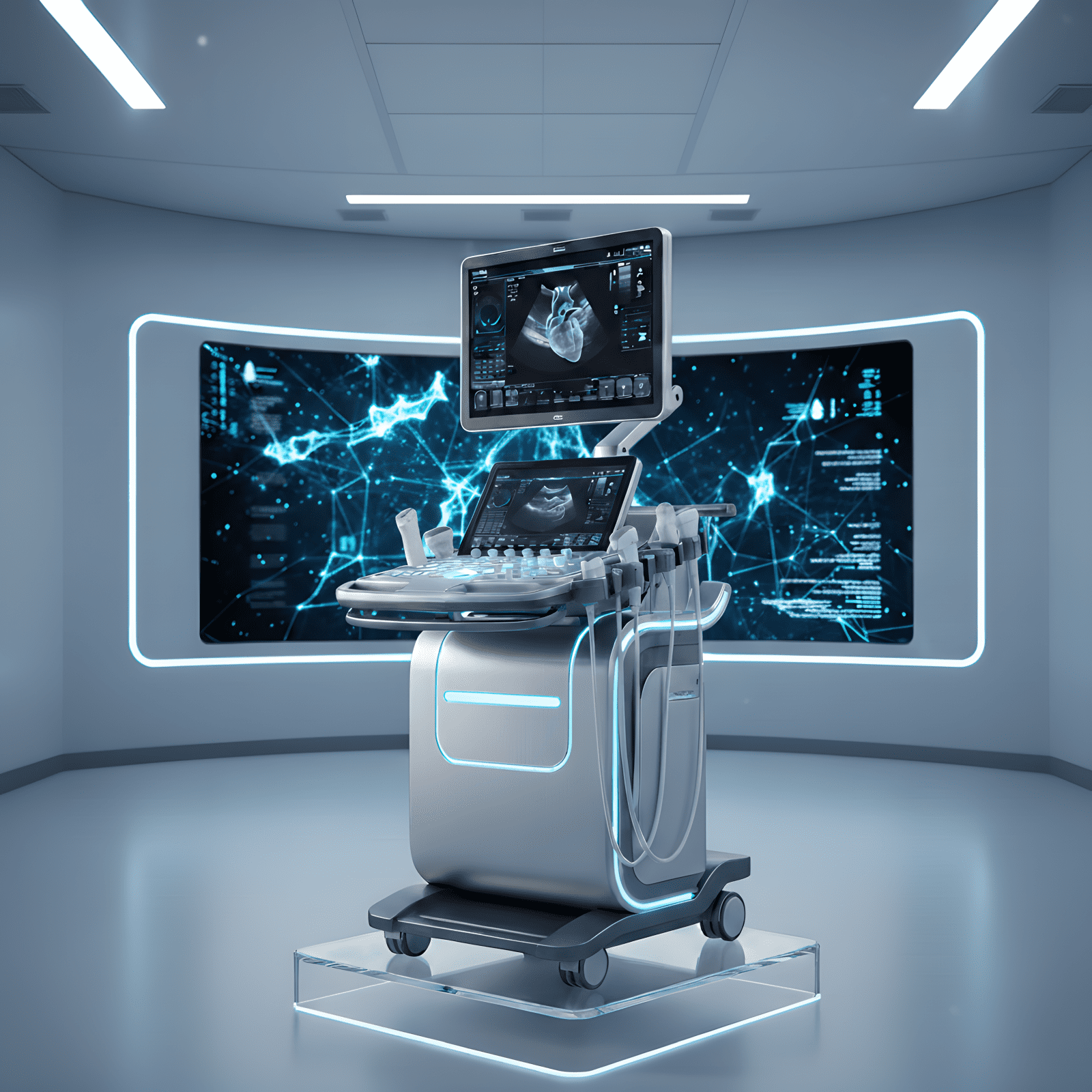

Samsung RS85: The Best Choice for Long-Term Health Monitoring
Modern healthcare increasingly emphasizes long-term monitoring—tracking thyroid nodules over years, surveilling breast tissue in high-risk patients, assessing liver health through multiple evaluations. Yet every imaging decision involves a trade-off between diagnostic information and accumulated risk. CT scans deliver exceptional detail but add radiation exposure. MRI provides superior soft tissue contrast but carries significant cost and access barriers.
Ultrasound changes this equation entirely. At Central Park Advanced Imaging, our Samsung RS85 Premium Ultrasound System provides high-resolution imaging with zero ionizing radiation—making it the ideal modality for patients requiring serial examinations over months, years, or decades. When you need to monitor findings repeatedly, safety isn’t just important—it’s essential.
Why Radiation-Free Monitoring Matters
A single CT scan delivers radiation equivalent to months or years of natural background exposure. While justified for acute diagnosis, repeated CT surveillance accumulates dose over time. Ultrasound eliminates this concern entirely—you can undergo monthly examinations if clinically indicated without any radiation risk. For young patients, pregnant women, and anyone requiring long-term monitoring, this safety profile is transformative.
The Radiation Reality: Why Dose Accumulates
Understanding why ultrasound’s radiation-free nature matters requires recognizing how diagnostic imaging radiation adds up over a lifetime.
CT and X-Ray: The Dose Problem
Every CT scan contributes to cumulative lifetime radiation exposure. While a single exam carries minimal individual risk, patients with chronic conditions may undergo dozens of scans over years. When monitoring requires quarterly or annual imaging, these doses compound.
This is particularly concerning for younger patients who have longer life expectancy and whose tissues are more radiosensitive. A patient undergoing annual CT surveillance for decades accumulates substantial radiation exposure that could have been avoided with alternative imaging when appropriate.
MRI: Radiation-Free But Resource-Intensive
MRI eliminates ionizing radiation but introduces different limitations. Scanner availability often means waiting weeks for appointments. Examination duration typically exceeds 30-60 minutes—challenging for patients who experience claustrophobia or difficulty remaining still. Cost substantially exceeds ultrasound. For routine surveillance where MRI provides only marginal advantage over high-quality ultrasound, these barriers make serial MRI impractical for most patients.
Ultrasound: The Monitoring Sweet Spot
Ultrasound combines diagnostic capability with practical advantages that make long-term monitoring feasible:
- Zero Radiation: No accumulated dose regardless of examination frequency
- Rapid Examination: Most studies complete in 15-30 minutes
- Real-Time Assessment: Dynamic evaluation unavailable with static CT or MRI
- Cost-Effective: Lower cost enables more frequent monitoring when clinically appropriate
- Immediate Availability: Same-week appointments standard rather than exception
- Comfortable Experience: No enclosed space, no loud noises, minimal positioning constraints
Samsung RS85: Engineered for Excellence in Monitoring
Not all ultrasound systems deliver equivalent image quality. The Samsung RS85 Premium represents advanced ultrasound technology designed specifically to provide diagnostic confidence that makes monitoring programs clinically viable.
Crystal Architecture: Consistent Image Quality
Long-term monitoring requires consistency. When comparing current findings to prior examinations, image quality variability introduces uncertainty. Did that thyroid nodule actually grow, or does it just appear larger due to different imaging parameters?
Samsung Healthcare addressed this through Crystal Architecture™—combining CrystalBeam™ beamforming technology, CrystalPure™ advanced image processing, and S-Vue™ single-crystal transducer technology. This architecture delivers consistent, high-resolution images regardless of operator or examination conditions. When you return for follow-up imaging months or years later, the quality remains equivalent, enabling confident comparison.
Advanced Visualization for Subtle Changes
Monitoring programs detect changes early—when findings are still subtle. The RS85 provides imaging capabilities that reveal what standard ultrasound might miss:
- HQ-Vision™ and PureVision™: Advanced processing reduces speckle noise and enhances edges, improving visualization of small structural changes.
- MV-Flow™: Microvascular imaging detects subtle blood flow changes that may indicate evolving pathology.
- S-Shearwave Imaging™: Quantitative tissue stiffness measurement tracks changes in nodule or lesion elasticity over time.
- EzCompare™: Instant side-by-side comparison with prior studies facilitates change detection.
Clinical Applications: When Serial Ultrasound Excels
Understanding where ultrasound monitoring provides maximum clinical value helps patients and physicians make informed imaging decisions.
Thyroid Nodule Surveillance
Thyroid nodules are extremely common—detected in a significant portion of adults undergoing neck imaging. The vast majority are benign, but distinguishing which nodules require intervention versus observation is critical.
Evidence-based guidelines recommend monitoring small, low-suspicion nodules with serial ultrasound rather than immediate biopsy or surgery. The typical surveillance protocol involves ultrasound at 12-24 months, then annually if stable. Over a patient’s lifetime, this may mean multiple thyroid ultrasounds.
The RS85’s capabilities make this monitoring program effective:
- S-Detect for Thyroid: AI-assisted classification provides standardized assessment across multiple examinations, reducing operator-dependent variability.
- Precise Measurement: Advanced measurement capabilities track nodule size changes accurately.
- Vascularity Assessment: MV-Flow™ technology detects internal blood flow patterns that may indicate concerning evolution.
- Elastography Integration: S-Shearwave Imaging™ quantifies tissue stiffness—increasing stiffness over time may suggest possible changes.
Breast Density and Lesion Monitoring
Women with dense breast tissue face increased breast cancer risk and reduced mammographic sensitivity. Supplemental ultrasound screening detects findings mammography alone might miss—but requires repeated examinations to be effective.
Serial breast ultrasound surveillance involves no radiation exposure—making it safe for high-risk women who require ongoing monitoring over years or decades.
The RS85 supports comprehensive breast surveillance through:
- S-Detect for Breast: AI-assisted BI-RADS classification standardizes lesion assessment across serial examinations.
- Systematic Coverage: Comprehensive breast evaluation ensures consistent examination.
- EzCompare™ Integration: Direct comparison with prior images highlights new findings or changes in existing lesions.
- High-Resolution Imaging: Crystal Architecture™ visualization enables confident characterization of small masses.
For patients with probably benign findings (BI-RADS 3), short-interval ultrasound follow-up at 6, 12, and 24 months establishes stability without repeated mammographic radiation.
Liver Health Assessment
Fatty liver disease affects many individuals and requires ongoing monitoring to assess progression or improvement in response to lifestyle modifications or medical therapy. Traditional liver biopsy is invasive, expensive, and carries procedural risk—making it unsuitable for serial assessment.
The RS85 provides non-invasive alternatives through advanced ultrasound technologies:
- S-Shearwave Imaging™: Quantifies liver stiffness as a marker of fibrosis progression or regression.
- Quantitative Tools: TAI™ (Tissue Attenuation Imaging) and TSI™ (Tissue Scatter Distribution Imaging) provide objective measurements supporting fatty liver assessment.
- Serial Comparison: Tracking stiffness values over months or years guides treatment decisions without invasive procedures.
Vascular Health Monitoring
Carotid artery disease, peripheral vascular disease, and aortic aneurysms require ongoing surveillance to guide intervention timing. Serial ultrasound provides radiation-free monitoring:
- Carotid Assessment: Tracking arterial wall thickness changes over time assesses cardiovascular risk and treatment response.
- Aneurysm Surveillance: Measuring abdominal aortic aneurysm diameter at regular intervals determines when intervention becomes necessary.
- Plaque Characterization: High-resolution imaging tracks atherosclerotic plaque progression or stabilization.
Pediatric and Pregnancy Safety
Children and pregnant women represent populations where radiation safety assumes paramount importance. Ultrasound enables comprehensive monitoring without the concerns that accompany CT imaging:
- Pediatric Monitoring: Following conditions like hydronephrosis or organ abnormalities without radiation exposure to developing tissues.
- Obstetric Care: Serial fetal growth assessments, amniotic fluid monitoring, and placental evaluation throughout pregnancy.
- Young Adult Surveillance: Patients in their 20s-30s requiring long-term monitoring accumulate zero radiation dose with serial ultrasound.
The Economics of Serial Monitoring
Practical monitoring programs must be financially sustainable over years or decades. Ultrasound’s cost profile makes long-term surveillance feasible where other modalities become prohibitively expensive.
Cost Considerations
A single ultrasound examination typically costs substantially less than CT and significantly less than MRI. When multiplied across multiple surveillance studies over a monitoring program’s duration, the difference becomes considerable. For self-pay patients or those with high-deductible insurance plans, ultrasound’s lower cost makes adherence to monitoring protocols more achievable.
Access and Compliance
Monitoring programs only work when patients actually complete recommended follow-up imaging. Ultrasound’s practical advantages improve compliance:
- Same-Week Appointments: Convenient scheduling supports adherence to surveillance protocols.
- Minimal Time Investment: Brief examinations fit into busy schedules without major disruption.
- Location Accessibility: CPAI’s Midtown Manhattan location minimizes travel barriers.
- Comfortable Experience: Positive examination experiences encourage continued participation in monitoring programs.
Health Tips: Maximizing Your Monitoring Program
Active participation in surveillance programs improves outcomes. These strategies optimize your monitoring experience.
Before Your Appointment
- Track Your Schedule: Set calendar reminders for recommended follow-up intervals—consistency matters in monitoring programs.
- Bring Prior Studies: If you’ve had imaging elsewhere, bring copies or ensure we can access them for comparison.
- Document Changes: Note any new symptoms or changes you’ve noticed since your last examination.
- List Medications: New medications or dosage changes may affect findings.
- Communicate Goals: Discuss monitoring goals with your physician—frequency and duration should match your clinical situation.
During Your Examination
- Mention Previous Findings: Alert the sonographer to prior abnormalities requiring focused evaluation.
- Ask Questions: Understanding what’s being assessed helps you participate actively in your care.
- Report Changes: New pain, lumps, or symptoms provide clinical context that guides examination focus.
After Your Results
- Understand Recommendations: Clarify why specific follow-up intervals were chosen.
- Schedule Proactively: Book your next surveillance appointment before leaving—consistency prevents gaps in monitoring.
- Maintain Records: Keep copies of reports documenting your monitoring timeline.
- Communicate Changes: If new symptoms develop before scheduled follow-up, contact your physician rather than waiting if clinical changes warrant earlier reassessment.
Why Choose CPAI for Long-Term Monitoring
Effective monitoring programs require consistency in equipment, expertise, and coordination. CPAI provides the infrastructure supporting multi-year surveillance:
Consistent Technology
Performing all surveillance examinations on the same ultrasound platform (Samsung RS85) eliminates equipment-related variability. Your images today directly compare with images from months or years ago because the technology remains constant.
Subspecialty Expertise
Board-certified radiologists experienced in ultrasound interpretation review all studies. Continuity of interpretation—having the same radiologist review serial examinations when possible—enhances change detection accuracy.
Integrated Care Coordination
When monitoring involves multiple modalities, CPAI’s comprehensive imaging suite enables coordinated evaluation:
- uMR Omega 3T MRI: When ultrasound findings require MRI clarification
- uCT Atlas 640-Slice CT: When vascular or anatomical detail beyond ultrasound capability is needed
- uMI 550 Digital PET/CT: When metabolic assessment complements structural monitoring
The Long View: Surveillance That Sustains Health
Healthcare is increasingly recognizing that preventing disease progression through active monitoring often outperforms waiting for symptoms to develop. But sustainable surveillance requires imaging that’s safe enough to repeat, accessible enough to schedule, and affordable enough to maintain.
Ultrasound—and specifically the Samsung RS85 Premium’s advanced capabilities—meets these requirements. Zero radiation enables unlimited repeat examinations. Rapid scanning and convenient scheduling support compliance. Cost-effectiveness makes long-term programs financially viable.
Whether monitoring thyroid nodules, tracking breast density, assessing vascular health, or following liver conditions, ultrasound provides the safety profile that makes decades-long surveillance not just possible but practical.
Call to Action
Start or continue your monitoring program with radiation-free ultrasound imaging. Schedule your surveillance scan online or call (212) 363-7315 to discuss how the Samsung RS85 Premium Ultrasound System supports safe, long-term monitoring for your specific clinical needs.