
Cleerly & HeartFlow: The New Gold Standard in Predicting Heart Disease

Cleerly & HeartFlow: The New Gold Standard in Advanced Cardiac Insight
Traditional cardiac screening has long relied on stress tests, calcium scoring, and symptom-driven evaluation. While each plays a role, they often provide only a partial view of coronary health. Calcium scoring focuses on hardened plaque, while soft, non-calcified plaque—the type most associated with future cardiac events—can go undetected. Stress tests assess functional impact but not overall plaque burden.
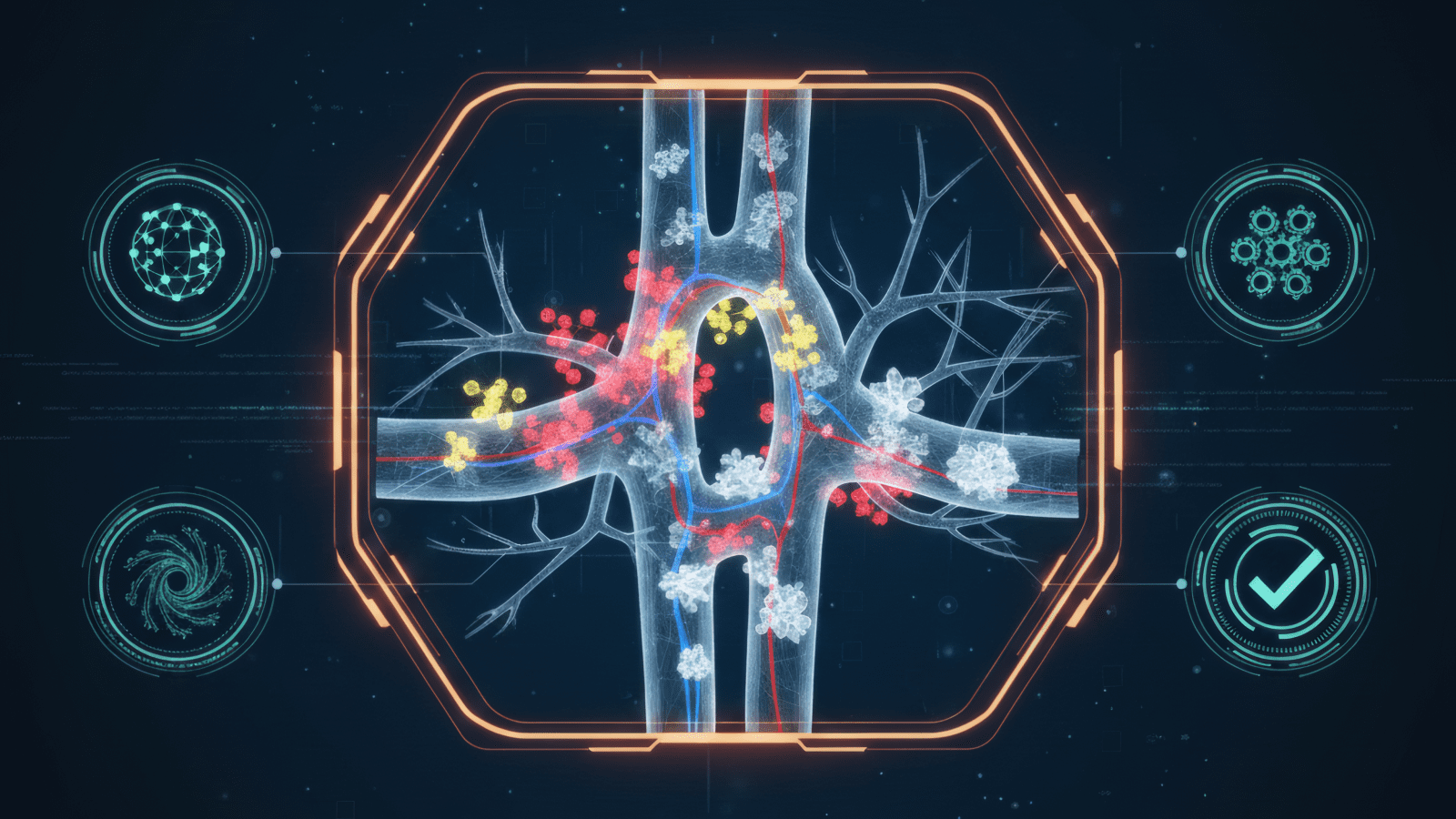
At Central Park Advanced Imaging, we’ve integrated two FDA-cleared AI platforms—Cleerly and HeartFlow—that elevate how coronary artery disease is evaluated. These technologies analyze your coronary CT angiography (CCTA) scan to quantify plaque burden, characterize plaque type, and assess blood flow dynamics. The result is a highly personalized, data-driven cardiac profile that supports deeper insight and earlier awareness.
Beyond Anatomy: Seeing What Matters
Standard CT imaging visualizes whether plaque exists. Cleerly measures how much is present and identifies different plaque types, including soft plaque. HeartFlow evaluates whether blockages alter blood flow. Together, they provide both anatomical and functional perspectives for a more comprehensive assessment.
Cleerly: Quantifying Coronary Plaque with Precision
Many cardiac events originate from soft, lipid-rich plaque rather than completely obstructed arteries. Calcium scoring primarily highlights hardened plaque, while Cleerly enables full-spectrum plaque visualization across the coronary tree.
Cleerly uses advanced deep learning to generate a 3D reconstruction of your coronary arteries and quantify plaque throughout each vessel with unprecedented detail.
What Cleerly Measures
- Total Plaque Volume: Quantification of atherosclerotic burden across all coronary vessels.
- Plaque Composition: Differentiates calcified, non-calcified, and low-density non-calcified plaque with intuitive visualization.
- Vessel-by-Vessel Analysis: Detailed assessment of each coronary artery and branch.
- Stenosis Quantification: Measurement of luminal narrowing with diameter and area evaluation.
- Longitudinal Tracking: Serial scans allow plaque trends to be followed over time.
HeartFlow: From Anatomy to Physiology
Identifying plaque is only one dimension of coronary evaluation. The next question is whether narrowing impacts blood flow. Traditionally, this required invasive catheter-based testing.
HeartFlow extends coronary CT angiography by using computational fluid dynamics to model blood flow through patient-specific coronary anatomy. This allows calculation of fractional flow reserve (FFR) non-invasively.
How HeartFlow Works
- 3D Modeling: Creates patient-specific digital coronary models from CT data.
- Flow Simulation: Applies physics-based calculations to model blood movement through coronary arteries.
- FFR Calculation: Determines fractional flow reserve values for individual vessels.
- Color-Coded Visualization: Provides intuitive vessel maps illustrating flow-related changes.
- Treatment Guidance Support: Helps identify which areas may warrant closer clinical consideration.
The Clinical Evidence: Broad Validation
Both platforms have undergone extensive clinical validation across large international studies, demonstrating strong diagnostic performance compared to traditional non-invasive testing.
Cleerly Validation
- CREDENCE Trial: Demonstrated strong performance of AI-based ischemia assessment compared to other non-invasive methods.
- CONFIRM Registry: Large-scale plaque analysis studies have shown improved risk stratification using quantitative plaque metrics.
- Coverage Landscape: Cleerly analysis is recognized in multiple clinical settings for enhanced coronary assessment.
HeartFlow Validation
- PLATFORM Trial: Demonstrated reduction in unnecessary invasive angiography among selected patient populations.
- Long-Term Outcome Studies: Extended follow-up data supports the role of functional coronary evaluation in long-term care planning.
- Diagnostic Performance: High diagnostic agreement with invasive fractional flow reserve testing has been demonstrated across multiple studies.
What This Means for Patients
The integration of Cleerly and HeartFlow supports a shift toward truly personalized coronary assessment. Instead of relying solely on population averages or symptom-triggered testing, patients receive analysis based on their unique coronary anatomy and physiology.
Clinical Applications
- Chest Pain Evaluation: Helps clarify whether symptoms are related to coronary flow limitation.
- Preventive Screening: Quantifies subclinical plaque in asymptomatic individuals seeking deeper cardiac insight.
- Treatment Optimization: Tracks plaque changes over time in response to therapy and lifestyle changes.
- Pre-Surgical Planning: Helps clarify which lesions may benefit from intervention and which can be managed conservatively.
- Risk Stratification: Provides quantitative metrics that complement traditional risk scoring.
The CPAI Advanced Cardiac Imaging Protocol
Our Advanced Cardiac Imaging (ACI) program integrates both platforms into a single, comprehensive coronary assessment. The process begins with a coronary CT angiography scan performed on our uCT Atlas 640-slice system, capturing the heart in a single 0.25-second rotation.
Your scan is then processed by both Cleerly and HeartFlow, generating complementary reports that together provide detailed anatomical and functional coronary insight. These results are reviewed by board-certified cardiac imaging specialists who translate advanced analytics into clear, actionable clinical information.
What You Receive
- Comprehensive Plaque Report: Quantitative plaque measurements and composition analysis from Cleerly.
- Functional Flow Assessment: 3D coronary maps with FFR values from HeartFlow.
- Integrated Interpretation: Physician-reviewed synthesis of anatomical and physiological findings.
- Longitudinal Comparison: For repeat imaging, quantitative plaque tracking over time.
The Future of Preventive Cardiology
The convergence of AI and cardiovascular imaging continues to advance how heart health is evaluated. Quantitative plaque assessment and functional flow modeling are helping move cardiac care toward earlier detection, refined risk insight, and individualized monitoring.
Emerging data continues to support the role of AI-assisted coronary analysis in enhancing traditional risk assessment—especially in patients whose plaque burden may not be captured by calcium scoring alone.
Looking Ahead
Both Cleerly and HeartFlow continue evolving through expanding datasets and algorithm refinement. At CPAI, we’re committed to delivering advanced cardiac imaging using leading technology and patient-first care.
Our integration of Cleerly and HeartFlow with the uCT Atlas 640-slice system offers comprehensive coronary evaluation in a private, concierge-level setting. Contact us to learn more about Advanced Cardiac Imaging, call us at (212) 363-7315, or book your scan online to take a proactive approach to your cardiovascular health.