
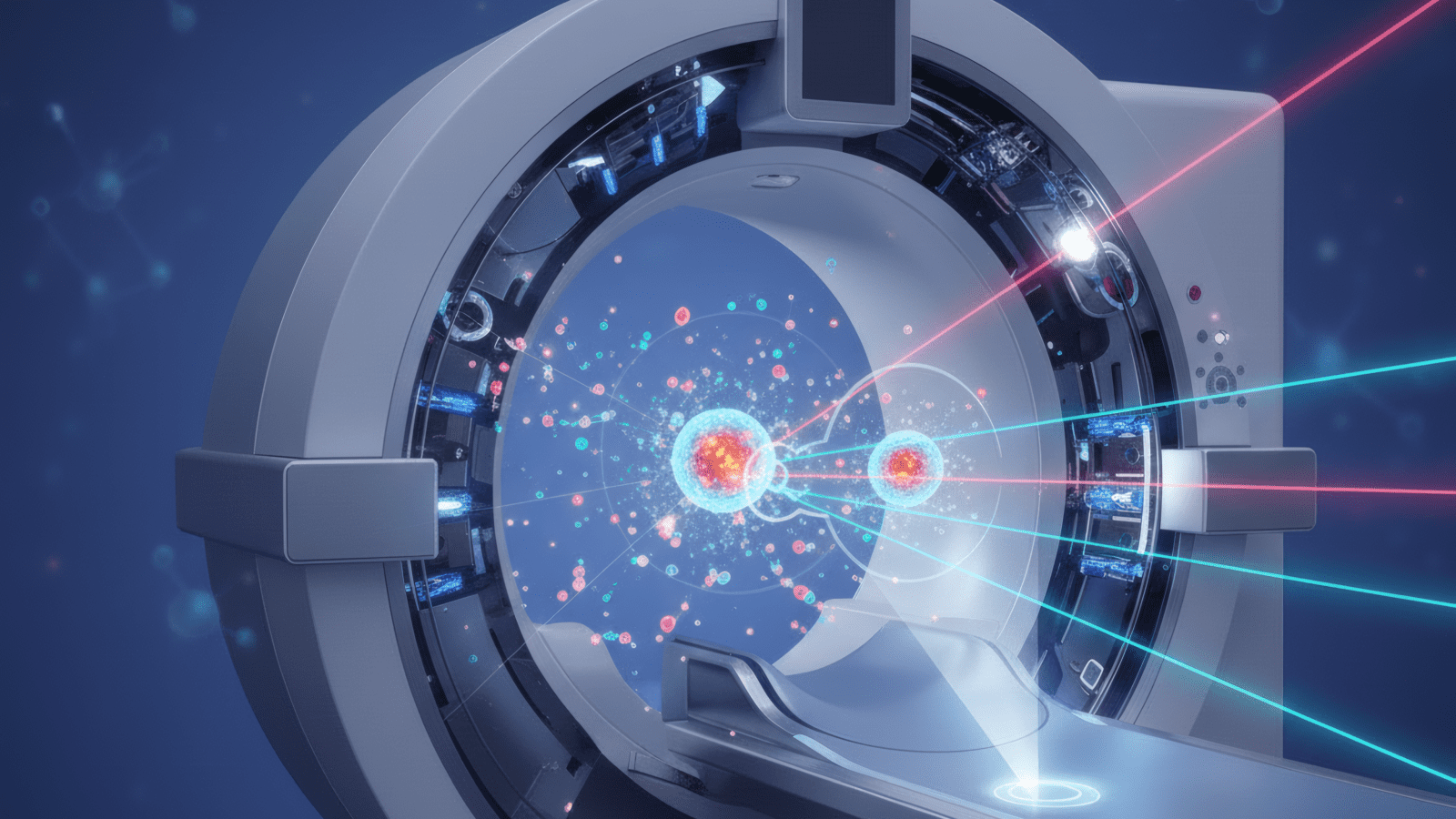
What is “Molecular-Level Precision” and Why Does It Matter for Your Health?

What is “Molecular-Level Precision” and Why Does It Matter for Your Health?
Medical imaging has evolved dramatically from simple X-rays that show bone fractures to sophisticated technologies that detect disease at the molecular level—long before you experience symptoms or structural changes become visible. But what does “molecular-level precision” actually mean, and why should it matter to you?
At Central Park Advanced Imaging, molecular-level precision refers to our ability to detect and quantify biological processes occurring at the cellular and molecular scale. Using our advanced uMR Omega 3T MRI and uMI 550 Digital PET/CT systems, we can identify metabolic changes, cellular activity patterns, and tissue composition abnormalities that traditional imaging misses entirely.
From Anatomy to Biology
Traditional imaging shows structure—where organs are located, their size and shape. Molecular imaging reveals function—how cells behave, what they metabolize, and whether disease processes are active. This shift from “what it looks like” to “what it’s doing” fundamentally changes early detection.
Understanding Resolution: How Small Can We See?
Resolution determines the smallest detail an imaging system can distinguish. Understanding these scales helps contextualize what different technologies can detect.
The Scale of Medical Imaging
- Standard X-Ray: Resolution approximately 0.5-1 millimeters—adequate for bone fractures, large masses, but misses subtle soft tissue changes.
- CT Scanning: Resolution approximately 0.5-1 millimeters—excellent for anatomical detail, bone assessment, and large lesion detection.
- Standard MRI (1.5T): Resolution approximately 1 millimeter—good soft tissue contrast, can detect structural abnormalities in organs.
- High-Field MRI (3T): Resolution down to 0.5 millimeters or better—reveals fine anatomical detail, tissue characterization, microscopic structural changes.
- Digital PET/CT: Spatial resolution 2-3 millimeters, but detects metabolic changes at the molecular level—function rather than just structure.
For context, a human cell measures approximately 10-30 micrometers (0.01-0.03 millimeters). While we cannot image individual cells in routine clinical practice, molecular imaging detects the collective behavior of cell populations—revealing disease processes before anatomical changes become visible.
What “Molecular-Level” Actually Means
Molecular imaging doesn’t mean photographing individual molecules. Instead, it means detecting and quantifying biological processes that occur at the molecular and cellular level—metabolism, receptor expression, cell proliferation, inflammation, and tissue perfusion.
Types of Molecular Information
- Metabolic Activity: PET imaging with FDG measures glucose metabolism—cancer cells consume sugar rapidly, appearing as bright spots potentially before tumors are visible on CT.
- Cellular Density: MRI diffusion-weighted imaging measures water molecule movement—restricted diffusion suggests tightly packed malignant cells.
- Tissue Composition: MRI spectroscopy analyzes chemical makeup of tissues, detecting abnormal metabolite patterns.
- Perfusion Patterns: Dynamic contrast-enhanced MRI tracks blood flow through tissues—abnormal vascularity can suggest early disease.
- Receptor Expression: Specialized PET tracers bind to cellular receptors, helping characterize disease and guide precision therapies.
Why Molecular Precision Matters: The Clinical Advantage
The advantage of molecular imaging is timing. Biological and metabolic abnormalities often appear before structural changes—months or even years earlier—making earlier intervention possible.
Early Detection Scenarios
- Cancer Screening: PET/CT detects increased metabolic activity in tumors smaller than 1 centimeter.
- Cardiac Viability: PET distinguishes viable myocardium from scar tissue.
- Neurological Assessment: Brain PET shows metabolic changes associated with neurodegenerative conditions.
- Inflammatory Conditions: MRI detects early inflammation when structural damage is minimal.
- Treatment Response: PET reveals metabolic response to therapy long before anatomical changes appear.
The Technology Behind Molecular Precision at CPAI
Achieving molecular-level precision requires sophisticated hardware, advanced imaging sequences, and intelligent data processing. At Central Park Advanced Imaging, we’ve invested in United Imaging’s flagship systems to deliver this capability.
Our uMR Omega 3T MRI: High-Field Advantages
- Signal Strength: Three Tesla magnets generate higher signal for improved detail.
- Built-In Spectroscopy: Enhanced chemical mapping of tissue composition for liver, prostate, and breast.
- Diffusion Imaging: Microscopic assessment of cellular environments.
- Perfusion Analysis: High-temporal-resolution vascular imaging with ASL technology.
- Functional Imaging: Detects subtle neuronal activity patterns.
Our uMI 550 Digital PET/CT: Molecular Metabolism
- Digital Detectors: Highly efficient direct-detection sensors for superior image quality.
- 2.9mm Resolution: Industry-leading spatial detail for metabolic imaging.
- HYPER Iterative Reconstruction: AI-driven processing for improved lesion detectability.
- Integrated 80-Slice CT: Anatomical precision fused with molecular data.
- SUV Quantification: Objective metabolic measurement for tracking changes over time.
Practical Applications: When Molecular Imaging Changes Management
Molecular imaging complements anatomical imaging by revealing underlying biology.
Clinical Scenarios Where Molecular Imaging Excels
- Indeterminate Nodules: PET determines whether nodules are metabolically active.
- Cancer Staging: Identifies metastatic disease not visible on CT alone.
- Therapy Monitoring: Early metabolic changes confirm treatment effectiveness.
- Recurrence Detection: PET detects recurrence when other studies are inconclusive.
- Radiation Planning: Identifies the most metabolically active tumor regions.
Limitations and Realistic Expectations
Molecular imaging provides extraordinary information, but understanding limitations is essential.
What Molecular Imaging Cannot Do
- Definitively Diagnose: Biopsy may still be required to confirm malignancy.
- Detect All Cancers: Some tumors show low metabolic activity.
- Guarantee Future Outcomes: Imaging reflects current status, not future risk.
- Visualize Individual Cells: Clinical imaging detects groups of abnormal cells.
- Eliminate All False Positives: Inflammation can mimic disease on PET.
What This Means for Your Health Decisions
Molecular-level precision allows earlier visibility into disease processes and adds powerful information to both diagnostic evaluations and preventive strategies.
Rather than waiting for symptoms, many patients choose molecular imaging proactively to gain clarity about their current health status, monitor known conditions, or establish a baseline for future comparison. When pursuing comprehensive evaluation, advanced molecular imaging can offer insights unattainable through any other non-invasive method.
Key Takeaways
- Molecular Imaging Detects Function: Reveals cellular behavior before structural changes appear.
- Resolution Isn’t Everything: PET detects metabolic abnormalities even when structural imaging looks normal.
- Earlier Intervention: Biological changes appear first—supporting proactive care.
- Complementary Approach: Molecular and anatomical imaging together provide a complete picture.
- Expert Interpretation: Our board-certified radiologists ensure accurate clinical meaning from every study.
At CPAI, our integration of the uMR Omega 3T MRI and uMI 550 Digital PET/CT provides molecular-level precision when it matters most. Whether you’re undergoing cancer staging, treatment monitoring, preventive screening, or evaluation of complex symptoms, this technology delivers information that guides confident medical decisions.
Contact us to learn how molecular imaging may support your health goals, call us at (212) 363-7315, or book your scan online.