
Beyond the Human Eye: AI’s Role in Next-Generation Preventive Care

Technology
Beyond the Human Eye: AI’s Role in Next-Generation Preventive Care
October 22, 2025
3 min read
amrichealth
Beyond the Human Eye: AI’s Role in Next-Generation Preventive Care
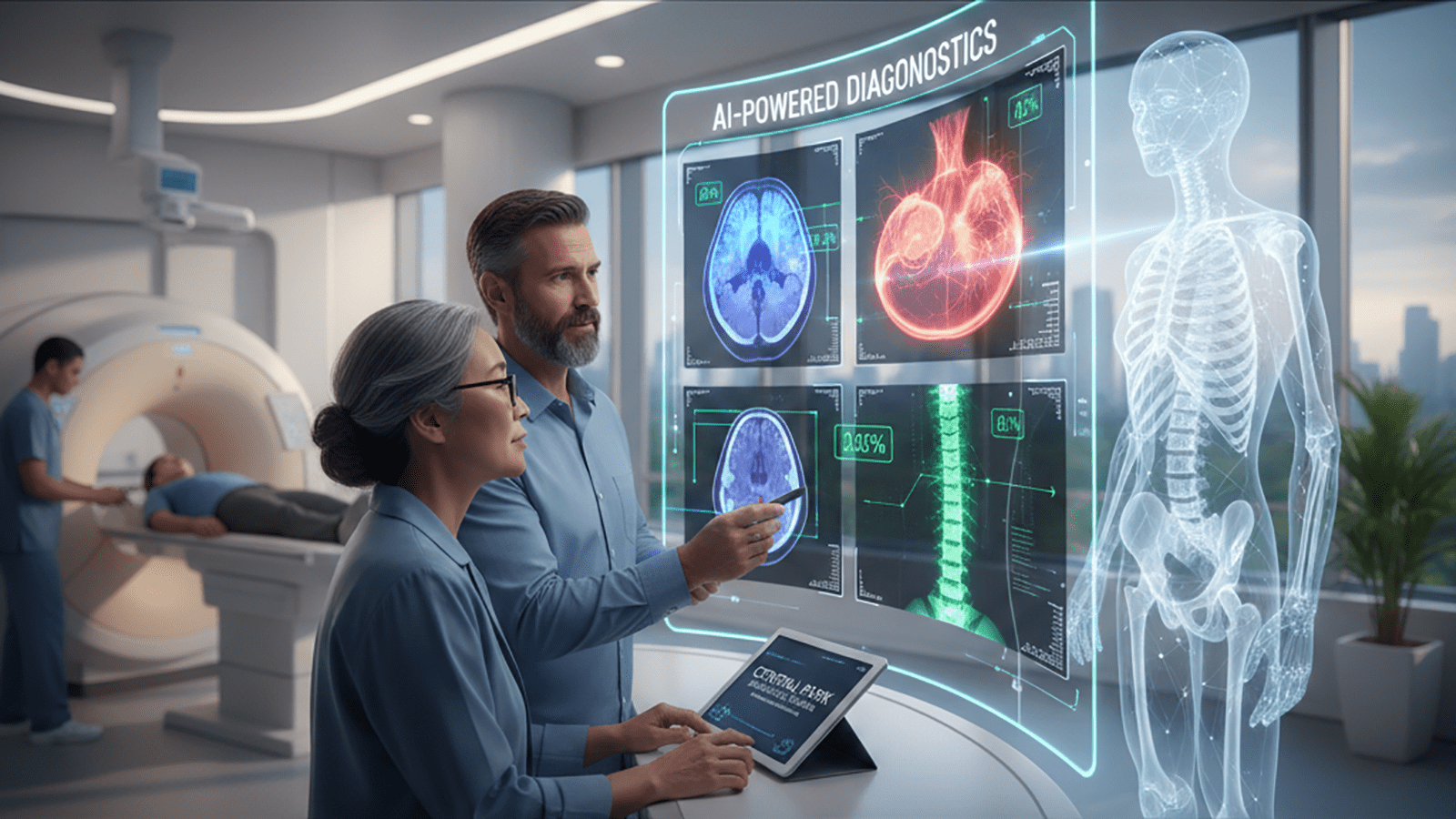
The integration of artificial intelligence into medical imaging represents one of the most significant advances in diagnostic medicine. AI algorithms can now analyze CT scans, MRIs, and PET/CT studies with remarkable precision, often detecting subtle abnormalities that might be missed by the human eye alone. At Central Park Advanced Imaging, we’ve witnessed firsthand how AI-assisted diagnostics are changing the landscape of preventive care. Our board-certified radiologists work alongside advanced AI systems to provide faster, more consistent interpretations of imaging studies.Key Benefits of AI in Medical Imaging
AI-powered diagnostics can reduce scan interpretation time by up to 50%, help detect subtle abnormalities earlier in their development, provide consistent analysis across thousands of images, and assist radiologists in prioritizing critical findings for immediate attention.How AI Enhances Accuracy
Modern AI systems are trained on millions of medical images, learning to recognize patterns associated with various conditions. This doesn’t replace the expertise of board-certified radiologists—instead, it augments their capabilities, acting as a highly trained second set of eyes.Real-World Applications
- Early Cancer Detection: AI algorithms can help identify suspicious nodules and lesions at earlier stages, when treatment options may be broader.
- Cardiovascular Assessment: Advanced systems analyze heart structure and function with exceptional detail, supporting risk assessment alongside physician evaluation.
- Neurological Screening: AI assists in detecting subtle brain changes associated with degenerative conditions, supporting earlier clinical evaluation when appropriate.
- Musculoskeletal Analysis: Automated assessment of bone density and joint conditions helps support diagnosis and long-term care planning.
“AI doesn’t replace radiologists—it supports and enhances clinical decision-making by adding speed, consistency, and data-driven insights to every study.”